
ENQUIRE NOW

Study in France

The United Kingdom is home to some of the world’s oldest and most prestigious universities, offering globally recognised degrees and shorter course durations. With guidance from a trusted UK Student Visa Consultant in Gandhinagar, students benefit from a strong academic reputation, diverse course options, and excellent post-study work opportunities.

Check Your Eligibility

Discover France

  • The first nation to sign an agreement with India for mutual recognition of academic qualifications.
  • Home to 15 Fields Medals and 64 Nobel Laureates, showcasing its excellence in research and innovation.
  • According to the QS World Rankings 2025, four French universities are among the top 100 globally.
  • France is a reasonably priced study destination with affordable living expenses and tuition fees.
  • It is the world’s fourth-largest international student destination.
  • Hosts more than 3,500 institutes of higher learning across the nation.
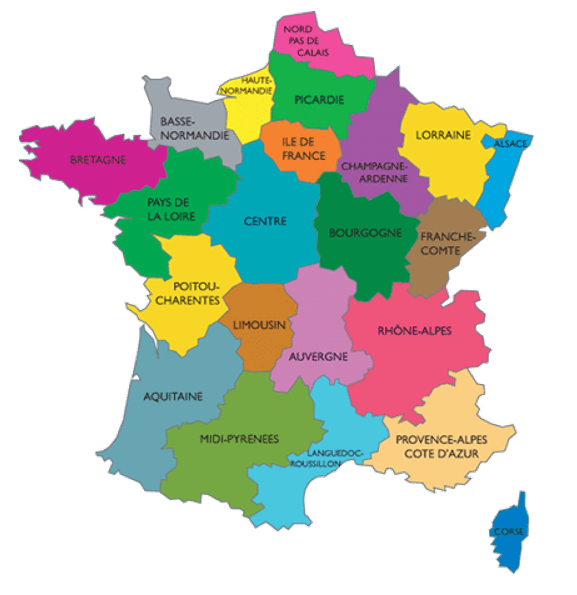
Map of France

🇫🇷 Reasons to Study in France

Explore why France is one of the most popular study destinations for international students seeking global exposure and quality education.

🎓

Academic Excellence

  • Home to highly regarded universities and elite business schools.
  • One-year master’s programs offering focused, intensive learning.
  • Globally recognized degrees with strong research opportunities.
💼

Work Opportunities

  • Paid internships available during your academic program.
  • Excellent part-time job options for international students.
  • Two-year post-study visa (PSW/APS) for job searching in France.
💰

Financial Benefits

  • Government discounts and subsidies through Social Security.
  • Wide range of scholarships available for international students.
  • Simple and transparent work visa procedures for permanent residency (PR).

🎓 Why Study in France?

France is one of Europe’s most respected education destinations — offering world-class academics, affordable tuition, rich culture, and globally recognized degrees.

  • Home to prestigious institutions like Sorbonne University, Université Paris-Saclay, and top Grandes Écoles.
  • Globally recognized degrees with a strong focus on research, innovation, and practical learning.
  • Affordable tuition fees with many public universities offering low-cost education.
  • Wide range of programs taught in English and French.
  • Post-study work opportunities through France’s job-search residence permit.
  • Over 1,500+ programs taught in English across disciplines.
  • Work up to 964 hours per year (around 20 hours per week) while studying.
  • Access to scholarships like Eiffel Excellence and government-funded aid.
  • Gateway to careers across Europe and Schengen countries.

🎓 Admission Requirements to Study in France

Learn what qualifications, documents, and scores are required for international students to study in France.

Bachelor’s Degree

  • Minimum Education: 12 Years (10+2) or 10+3 Diploma
  • Minimum Percentage: 60%
  • IELTS / PTE / TOEFL: Overall 5.5 in each band
  • Backlogs: Up to 10 (some private universities may accept more)
  • Other Tests: N/A

Master’s (MS / MBA)

  • Minimum Education: 3–4 Years of Graduate Degree
  • Minimum Percentage: 60%
  • IELTS / PTE / TOEFL: Overall 6.5, no band less than 6
  • Backlogs: Accepted depending on university policy
  • Other Tests: GMAT / GRE (for specific programs)

Additional Prerequisites

  • IELTS score strengthens your profile, though MOI (Medium of Instruction) is accepted.
  • Students must clear Campus France and university interviews focused on motivation and language.
  • Requirements differ by course and institution.
  • UG programs require 10+2 certification and English proficiency proof.
  • PG programs need a bachelor's degree, GMAT/GRE (if applicable), and English proficiency.
  • PhD programs require a master’s degree or equivalent qualification.

Documents Required

  • Academic Transcripts
  • Statement of Purpose (SOP)
  • Letter(s) of Recommendation (LOR)
  • Passport & National ID Proof
  • English Test Scores (IELTS / TOEFL / PTE)
  • Application Fee Receipt
  • Financial Proof / Bank Statements
  • Scholarship Documents (if any)

How to Apply for a France Student Visa

Follow this step-by-step guide to successfully apply for your student visa to study in France.

1

Sign up through Campus France

Create your profile and register your application.

2

Apply via Études en France

Indian students must apply through the Études en France platform.

3

Prepare Documents

Gather all academic, financial, and identification documents.

4

Review Your Checklist

Cross-check your paperwork to ensure nothing is missing.

5

Schedule Appointment

Book an appointment at your nearest VFS or French embassy.

6

Submit Biometrics

Visit the VFS centre for biometrics and document submission.

7

Attend Visa Interview

Some applicants may need to attend a short visa interview.

8

Wait for Visa Approval

Visa processing may take several weeks — apply early.

9

Verify VLS-TS Visa

Within 3 months of arrival, validate your long-stay visa online.

Step 1: Sign up through Campus France

Begin your France study journey by registering your profile on Campus France, the official platform for managing applications and student visa processes.

Step 2: Apply via Études en France

For Indian students, all university applications must be submitted through the Études en France portal to streamline processing and communication.

Step 3: Prepare Documents

Collect your academic transcripts, passport, photographs, financial proofs, SOP, and admission letter. Keep both originals and photocopies ready.

Step 4: Review Your Checklist

Verify that all required documents are included to prevent delays in the visa process. Double-check your Campus France file status.

Step 5: Schedule Appointment

Book your appointment online through the VFS website or the French Embassy for document verification and biometric submission.

Step 6: Submit Biometrics

Attend your appointment in person to submit biometrics and original documents. You will receive an acknowledgment receipt afterward.

Step 7: Attend Visa Interview

Certain applicants may be invited for a brief interview assessing study motivation, course understanding, and language proficiency.

Step 8: Wait for Visa Approval

Once your file is verified, visa processing usually takes 2–6 weeks. Track your application status online through VFS or Campus France portals.

Step 9: Verify VLS-TS Visa

Upon arrival in France, validate your long-stay visa (VLS-TS) online within 3 months. This converts your visa into a residence permit.

Top Universities in France

Discover France’s top-ranked universities recognized globally for academic excellence, innovation, and international diversity.
#24
PSL University Paris Logo

PSL University Paris

Prestigious research-driven university combining heritage and innovation across disciplines.

#46
Polytechnic Institute of Paris Logo

Polytechnic Institute of Paris

World-class engineering and science institution renowned for academic rigor and innovation.

#63
Sorbonne University Logo

Sorbonne University

Historic institution known for excellence in arts, humanities, and natural sciences.

#73
Paris-Saclay University Logo

Paris-Saclay University

Leading research university with global partnerships in science and technology.

#184
Higher Normal School of Lyon Logo

Higher Normal School of Lyon

Elite institution focusing on teacher training and advanced scientific research.

#248
Paris City University Logo

Paris City University

Offers strong programs in medicine, law, and social sciences with global collaborations.

#251
Paristech Bridges School Logo

Paristech Bridges School

Specializes in civil engineering, environmental sciences, and architecture innovation.
#283
Pantheon-Sorbonne University Logo

Pantheon-Sorbonne University

Known for excellence in economics, humanities, and law across Europe.
#334
Grenoble Alpes University Logo

Grenoble Alpes University

Dynamic university in the Alps region, leading in technology and sustainable development.

#367
Sciences Po Paris Logo

Sciences Po Paris

Internationally acclaimed for political science, international relations, and public policy studies.

Popular Courses

Discover Australia’s most in-demand academic programs, designed for global success and innovation.

🧠

Cybersecurity

Safeguard digital systems with advanced ethical hacking and forensics.

📊

Data Analytics & Data Science

Master AI-powered insights, predictive modeling, and big data analytics.

📅

Project Management

Lead agile teams and deliver global-scale projects with confidence.

💻

Information Technology (IT)

Build next-gen systems, networks, and secure digital ecosystems.

⚙️

Engineering

Drive innovation in civil, mechanical, electrical, and structural engineering.

💉

Nursing, Pharmacy & Health Sciences

Enhance patient care and contribute to health innovation and safety.

💰

Accounting & Finance

Develop expertise in auditing, taxation, and corporate financial management.

📚

Teaching

Inspire lifelong learning with educational leadership and classroom innovation.

🎨

Creative, Visual & Performing Arts

Express your talent through design, film, and digital visual storytelling.

🌿

Agriculture & Life Sciences

Advance sustainability, food security, and environmental biotechnology.

Study in France Cost of Education

Get a clear overview of the average tuition fees, living expenses, and potential student earnings while studying in France.

Average Cost Overview (Per Year)

Course Level Average Cost in Euro / Year
Per Year Tuition Fee €2,481 – €3,378
Living Expense Per Year €7,800 – €12,000
Student Income Per Year €7,900

Estimated Total Funds (For Visa)

Expense Type Estimated Value (EUR)
Tuition Fee per year (Average) €3,000
Living Expenses €10,000
Travel & Miscellaneous €1,000
Total Fund to Show (Approx.) €14,000 – €15,000 (≈ ₹13–14 Lakh)

Options for Scholarships to Study in France

Explore top scholarships that help international students pursue higher education in France — supporting tuition fees, research, and living expenses.

Walter Jensen Scholarship

Provider: American Association of Teachers of French (AATF)

Eligibility: Students pursuing French language education and cultural studies.

Benefit: USD 2,000 – 4,000 per year

ISA Diversity Scholarship

Provider: International Studies Abroad (ISA)

Eligibility: American students from diverse backgrounds studying in France.

Benefit: USD 1,000 – 2,000 per year

Campus France Scholarship

Provider: Campus France – French Government

Eligibility: International students demonstrating strong academic performance.

Benefit: USD 1,000 – 4,500 per year

Fulbright Scholarship

Provider: Fulbright Commission – France

Eligibility: Graduate and research students promoting U.S.–France academic exchange.

Benefit: USD 1,000 – 2,500 per year

Eiffel Scholarship Program of Excellence

Provider: French Ministry for Europe and Foreign Affairs

Eligibility: High-achieving students applying for master’s and PhD programs.

Benefit: USD 1,000 – 2,316 per year

Erasmus+ Mobility Scholarship

Provider: European Commission

Eligibility: International students participating in exchange or mobility programs.

Benefit: USD 4,000 – 6,210 per year

The Chateaubriand Fellowship

Provider: Embassy of France in the United States

Eligibility: PhD students conducting research in French universities or laboratories.

Benefit: USD 1,230 – 2,000 per year

Alexandre Yersin Scholarships

Provider: Consulate General of France in Hong Kong & Macau

Eligibility: Postgraduate students pursuing advanced research or innovation in France.

Benefit: USD 8,000 – 10,808 per year

Career After Study

Post-Study Work Opportunities in France for International Students

France offers excellent post-study work rights for international students to advance their careers after graduation. Students who have completed their degree in France are eligible for a Post-Study Work Permit of up to two years to explore global job opportunities.

Since France is home to many world-leading brands such as L’Oréal, Airbus, Renault, and BNP Paribas, graduates can find rewarding career paths across industries like engineering, luxury management, finance, and technology.

French universities also integrate paid internships into their programs, giving students valuable industry exposure and professional experience while studying.

In addition, international students are allowed to work 20 hours per week during their studies and full-time during vacations. France’s minimum wage, as of recent updates, stands at around €10.03 per hour, ensuring students can support part of their living expenses.

👨‍🎓 Work Permit Duration

Up to 2 Years (Post-Study)

💼 Avg. Salary Range

€35,000 – €65,000 / Year

🌍 Work Rights

20 hrs/week during study & full-time in vacations

Career in France

Why Apply for Permanent Residence (PR) in France?

France provides international graduates with excellent pathways to build long-term careers and eventually gain permanent residence. The country’s strong economy, social benefits, and work-life balance make it one of the most attractive destinations for skilled migrants.

  • Pathway to European Union residency and citizenship
  • Access to France’s universal healthcare system
  • Free or subsidized education for children
  • Equal work rights and social benefits as French citizens
  • Long-term residence permits valid up to 10 years

Graduates who complete higher education in France and gain professional experience can apply for a Carte de Résident (Resident Card), valid for up to 10 years. After residing continuously for five years (or less in specific cases), individuals may become eligible to apply for French citizenship, provided they meet language and integration requirements.

Process to Apply for PR in France

The following steps summarize how students can transition from study to permanent residence:

  1. Step 1: Obtain Post-Study Work Visa (APS/VLS-TS): After completing your studies, apply for a post-study work permit (up to 2 years) to gain professional experience in France.
  2. Step 2: Apply for Temporary Residence (Carte de Séjour): Once employed, you can extend your stay by switching to a work-based residence permit.
  3. Step 3: Apply for Long-Term Residence (Carte de Résident): After 5 years of continuous residence, you become eligible for the long-term residence permit, valid for 10 years.
  4. Step 4: Apply for French Citizenship: Permanent residents who meet language (B1 level) and integration criteria can apply for citizenship through naturalization.

France PR Eligibility

  • Residence Duration: Minimum 5 years of continuous stay in France
  • Employment: Valid work contract or self-employment in France
  • Language Requirement: French proficiency (DELF B1 or higher)
  • Financial Stability: Proof of steady income and tax compliance
  • Health & Character: Medical insurance and clean police record
  • Integration: Demonstrated integration into French society and culture

FAQ’s for France Student Visa

  • How much does it cost to study in France?

    Yes.  In addition to the tuition fees, which start at 8K a year for master's courses, the average cost of living in France varies from 600 to 1000 euros, depending on where you choose to study.  The full data regarding the expense of studying in France are available.

  • What are the requirements to study in France?

    Having an IELTS score is like having icing on the cake because the European educational system offers the option of assessment based on MOI.  IELTS is not required, although it does assist strengthen your profile.  To pass the university and campus France interview, you must possess certain abilities.  They are rather straightforward and primarily concentrate on your language proficiency and study enthusiasm.  You can review our checklist section about the documentation process.

  • Is France good for study?

    France's rich culture, cuisine, architecture, and vibrant student life make it the perfect destination for your degree study abroad!  Learning the language and gaining a cultural perspective are two benefits of studying in France.

  • Is it necessary to know French to study in France?

    The majority of programs in France are taught in English, therefore learning French is not required.

  • Is IELTS mandatory for study in France?

    No, you can apply without taking the IELTS exam in France. Nearly all prestigious colleges and business schools admit applicants based on their MOI.

  • Where can apply for scholarship?

    You can apply for almost all scholarships through Campus France; to find out which scholarships are available, go to this page:  Scholarships in France

  • Is living and working in France after graduation possible?

    Indeed, it is quite plausible.  You can apply for an APS visa, often known as a "post study job search visa," if you have completed an RNCP or Grand Ecoles recognised master's degree program from any French institution.  You can change your visa to a work permit when you land a job.  Click on France PR for Indian Students to learn more about post-study work, PR scenarios, and possibilities.

  • What is triple accredited business school in France? Why applying in accredited school important?

    An impartial organisation evaluates the educational quality of a particular study program or educational institution as part of the accreditation process, which is a quality assurance procedure.  An organization's accreditation of a business school indicates that the institution satisfies a set of quality requirements, guaranteeing that students pursuing business and MBA degrees receive top-notch instruction.

    Typically, accreditation is granted for a set period of time (e.g., five years) or for particular study programs.  The university must reapply for accreditation after that period or if there are significant changes.

    Accreditation of business schools is carried out by separate groups, each of which has created its own standards.  The three biggest associations for accrediting international business schools are:

    • AACSB - The Association to Advance Collegiate Schools of Business (based in Tampa, Florida, USA)
    • AMBA - The Association of MBAs (based in London, United Kingdom)
    • European Quality Improvement System (based in Brussels, Belgium)
  • How much does it cost to study in France?

    Good business schools typically charge between 7,500 and 15,000 euros, however some specialised programs at prestigious universities may charge more.  Public universities frequently cost as little as 3500–7000 euros, or nearly nothing.  This expense is projected annually.

Official Reference

Official Government Websites — France

For accurate, up-to-date, and legally valid information related to studying in France, always consult official French government and education portals.

France is a leading destination for international students, offering high-quality education, globally ranked universities, and a strong research ecosystem. All regulations regarding student visas, residence permits, education, and living conditions are governed by official French authorities.

  • Student Visa & Residence Permit Information
  • Higher Education & University Admissions
  • Campus France Application Process
  • Living in France: Healthcare & Registration
  • Official Policies, Fees & Updates